2-nd solution – BREWORX DECOCTION
Upgrades of existing brewhouses for the producing ability of traditional Czech beer – reconstructions of infusion brewhouses for the decoction beer brewing method.
About the manufacturing process of the world-famous Czech beer
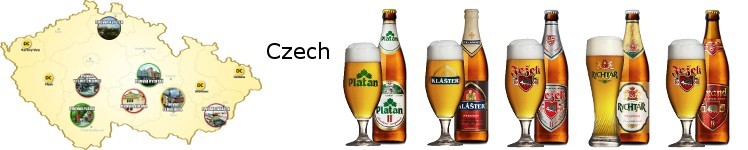
Light lager, that is considered to be typical Czech beer, is brewed using decoction from two mashes of Moravian pale malt, soft water and Czech hops.
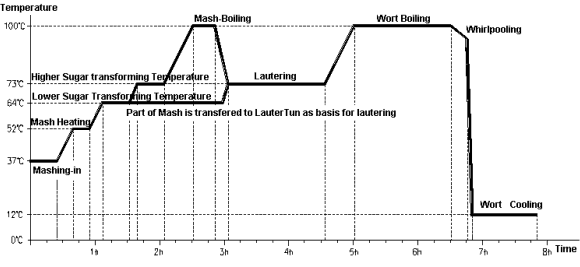
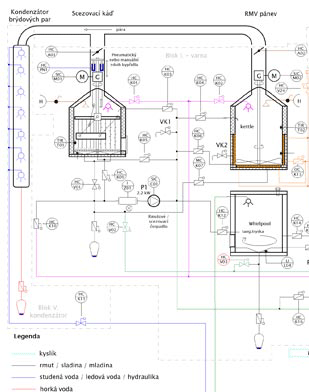
The decoction method of brewing means that first part of wort (a solution of water and grist) is divided into two parts, with one part (the mash) is gradually brought to boiling and is then mixed with the rest of the production. During decoction method of brewing, the same is performed again, even at higher formature temperature. Mass is then strained through a straining sieve, received extract from crushed malt (the malted grains) becomes wort. This is heated together with hops, thereby the beer gaines its characteristic bitterness and aroma, and the wort is sterilized as well. At the end of the hops boiling is no longer blank is called wort, this is emptied when the hops swirling in a whirlpool tub.
The beer decoction brewing cycle :
The wort is then cooled to fermentation temperature, oxygenated and leaves the brewhouse. Beer-Fermenting Beer is then reviled to fermenting room where shallow open fermentation tanks proceed lower main fermentation activity for yeasts Saccharomyces uvarum , a period is usually 6 to 12 days at temperatures from 6 to 12°C. During the main fermentation the beer goes through several phases, which are manifested in the appearance and color of foam on the surface of the fermenting beer. This foam (so-called a quilt) must be collected during the last stage ot the beer fermentation so that it could not fall into the beer, which would result in degradation of the taste of beer called parasite bitterness. Incompletely fermentated beer is subsequently freed from yeast and pumped into the lager tanks, wherein at 1-3 °C matures, while extending the remaining yeast fermentation beer and carbonated waste product of fermentation carbonation. This beer gets a characteristic zest and fullness. Beer maturation takes place several weeks to months (stronger beer matures longer) after completion of the maturation, the beer is twisted into the bright beer tanks, adapted for pressure up to 3 bars. For bottling the beer must be get rid of residual yeast, either by filtration or by filtration and subsequent pasteurisation, thereby stabilizing the beer.
Read also …. Why can be Czech beer be produced only in original Czech breweries?
The brewhouse upgrade service includes :
- The initial consultation and analysis– expert consultation on-site. The result is the evaluation of the customer’s business plan by our expert, processing of technological and economic model, preparing of quotation for the reconstruction of the optimally designed brewhouse, layout of all equipment . Usual price: EUR 1.000 + travel costs
- Technological project– the technological project includes: text part and drawings, a detailed description of the technological and technical solutions for the required reconstruction of the brewhouse. Price will be calculated individually after initial consultation and analysis.
- The factory equipment production– We manufacture the required equipment for the reconstruction of the brewhouse by the project, and we will prepare it for installation. We will do this work in our factory in the Czech Republic. Price will be calculated individually after finalizing of the technological project.
- The assembling of technology in place– all manufactured components will be implemented on the existing brewhouse. The brewhouse will be reconstructed by the project. These works will be carried out by a team of trained construction workers.Price will be calculated individually after finalizing of the technological project.
- Commissioning of the production system– we will complete all works that are necessary for putting into operation of the brewhouse. These works are led by an expert on the installed technology (technologist, brewer). Price will be calculated individually after finalizing of the technological project.
- Trial operation, operator training – our Czech brewer prepare one or more batches of wort in the brewhouse, and he teaches the customer to operate the new technology. Price will be calculated individually after finalizing of the technological project.
More about the brewhouse upgrade and modernization services
Do you plan to modernize your brewery ? Think about purchasing of full new all-in-one brewhouse.
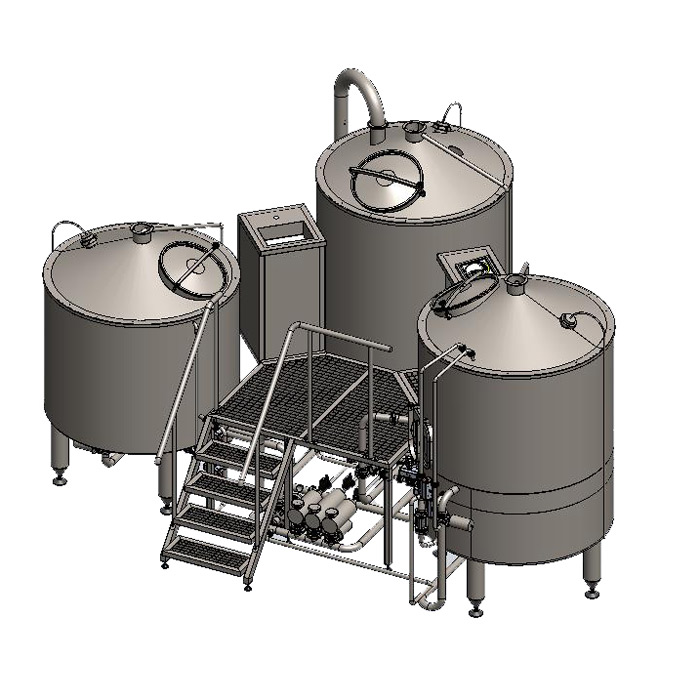
Our dual (infusion + decoction) brewhouses :
BREWORX TRITANK BREWORX CLASSIC BREWORX OPPIDUM
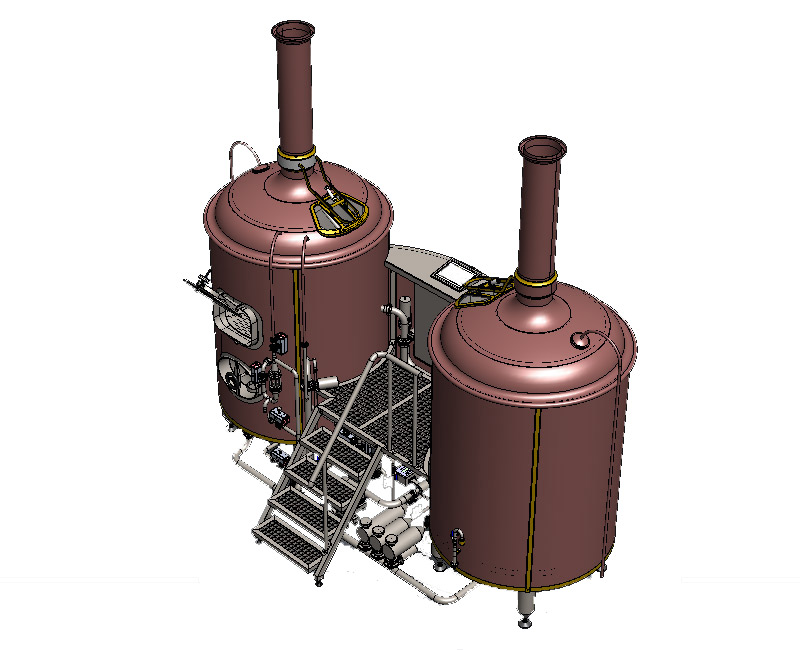
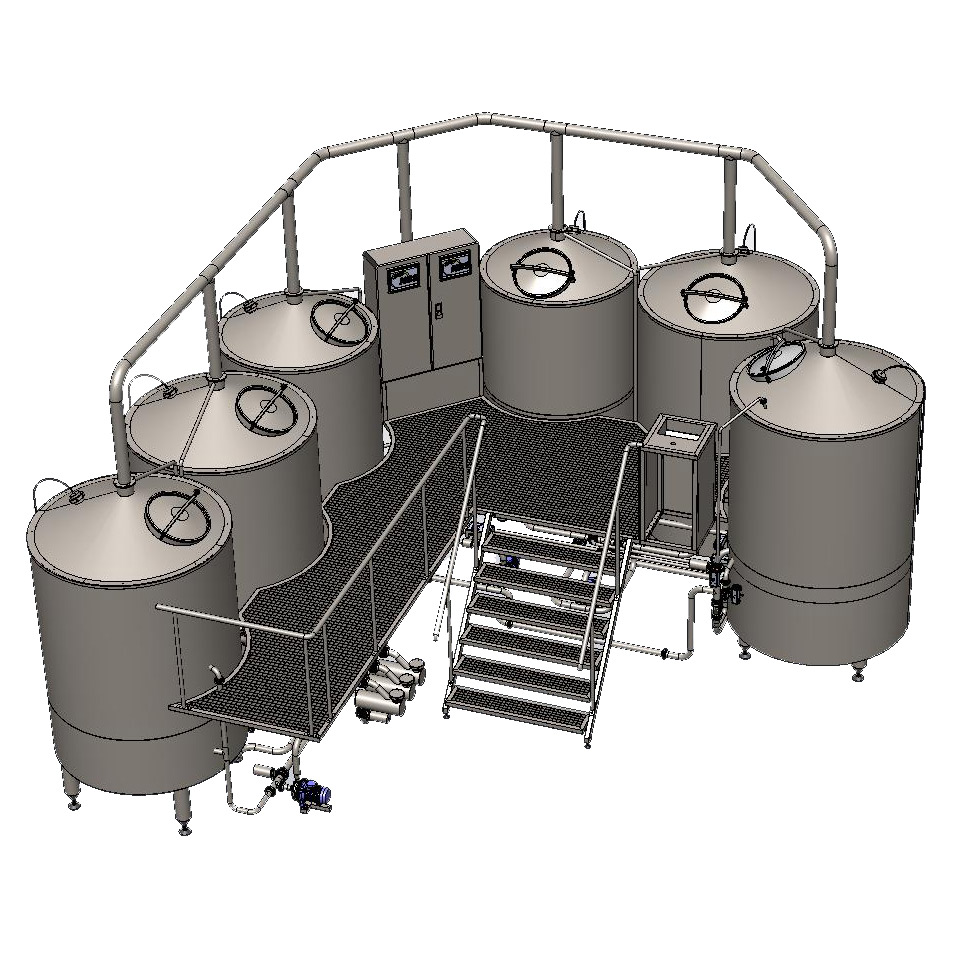
More about the brewhouses
More informations about our brewhouse portfolio .
 … Click for download of this offer in the printable PDF document .
See also : Some of our good Czech solutions for small breweries :
1-st solution – BREWORX VARIO CCT
2-nd solution – BREWORX DECOCTION
3-rd solution – BREWORX MOBILE CIP
4-th solution – BREWORX KEG WASHFILL
5-th solution – BREWORX MODULO KIT
6-th solution – BREWORX BEERCIDERLINE
7-th solution – BREWORX FUIC
8-th solution – CCTM MULTITANKS
9-th solution – HOP EXTRACTOR
10-th solution – CFS SETS